School of Chemical Engineering


The Centre’s access to UQ’s advanced engineering groups supports HBIS’s strategic business objectives for developing innovative technologies in environmental engineering, metallurgical resources and high quality steel materials. More than a collaborative research centre, ICSS also enriches training in research and business management with internships and customised executive courses through UQ Business School.


Carbon Dioxide Capture and Utilisation Group

We are mainly focused on the fields of capturing and utilising carbon dioxide waste emitted from energy-intensive industries.

Our research interests include:

  1. Electrochemical conversion of CO2 to produce value-added products
  2. Electro-catalysts design and development
  3. CO2 capture techniques and process integration
  4. Electrode structure design and optimisation
  5. CO2 electrolyser development and optimisation
  6. Industrial carbon footprint mapping and modelling
  7. Techno-economic feasibility analysis for CO2 capture and utilisation technologies.

Facilities

  1. Metrohm Autolab/PGSTAT302N equipped with BOOSTER20A
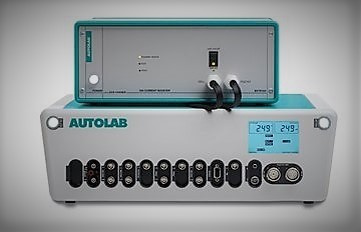
    Autolab/PGSTAT302N is a modular high power potentiostat/galvanostatic for various electrochemical characterisations, such as voltammetric analysis, cyclic and linear sweep voltammetry, chrono analyses and impedance analyses. The maximum current is 2A (20A if with BOOSTER20A), and the compliance voltage is 30V.

    Metrohm Autolab/PGSTAT302N equipped with BOOSTER20A
  2. PerkinElmer Spectrum 100 FT-IR spectrometer equipped with ATR

    The PerkinElmer Spectrum 100 FT-IR spectrometer can be used in IR spectroscopy for various materials testing and research applications such as revealing the composition of solids, liquids, and gases. The detailed specifications of this instrument are as follows:

    • It contains a large, purgeable, sample compartment. Can operate in ratio, single-beam, or interferogram mode.
    • Data collection can be done over a total range of 7800 to 370 cm-1 (220 cm-1 with CsI beamsplitter) with a best resolution of 0.5 cm-1.
    • Consists of a mid infrared detector – either DTGS (deuterated triglycine sulphate) or LiTaO3 (lithium tantalate) – as a standard, and the option of using MCT (Mercury Cadmium Telluride) or PAS (a photoacoustic detector).
    PerkinElmer Spectrum 100 FT-IR spectrometer equipped with ATR

  3. Gas Chromatograph (GC) – 2014, Shimadzu, Japan

    GC – 2014 equipment is a usual chromatography equipment used for the quantification and analysis of mixture of gases or volatile compounds. The sample gases/compounds are usually injected to GC using transport gas (Helium or nitrogen is used as the so-called carrier gas) and vaporized into the column. Either a capillary or a packed column is used in this case. The column is the stationary phase and the gas is the mobile phase. The different components are then separated into the column. After exiting the column, these components are quantified by the detectors. This equipment has been equipped with thermal conductivity detector (TCD) and flame Ionization detector (FID).

    Gas Chromatograph (GC) – 2014, Shimadzu, Japan
  4. Gas Chromatograph (GC) – 8A, Shimadzu, Japan

    GC – 8A is a basic gas chromatograph, easy to use and quite economical. It only supports a single detector(currently TCD) with manual flow and pressure control on column injection ports. It can provide isothermal temperature mode.

    Gas Chromatograph (GC) – 8A, Shimadzu, Japan
  5. Clarus 600/680 GC-MS, PerkinElmer

    This equipment is a refined benchtop mass spectrometric detector that provides you with simple tools needed to execute the routine gas chromatography/mass spectrometry (GS/MS) analyses as well as the tools required to execute more complex analyses. Electron ionization (EI) mode or chemical ionization (CI) mode are used in MS runs for the characterization of the samples. This equipment is controlled using a PerkinElmer TurboMassTM GC/MS software.

    Clarus 600/680 GC-MS, PerkinElmer
  6. Mass Spectrometer BELMass – Japan

    BELMass is a benchtop mass spectrometer used for efficient quantitative analysis of gases.

    Mass Spectrometer BELMass – Japan

  7. Surface Area and Porosity System TriStar – Micromeritics

    It is a fully automated, three-station surface area and porosity analyser that deliver high-quality data. It also provides higher accuracy and speed of quality control analyses, yet has resolution and data reduction capability. It also features a Krypton Option, allowing measurements in a low surface area range. The key features include:

    • The three analysis port can operate independently of each other as well as simultaneously, gathering three BET surface area measurements in less than 20 minutes
    • It accommodates the use of CO2, Ar and other non-corrosive gases such as methane, butane, or other light hydrocarbons
    • Standard nitrogen system can measure surface areas as low as 0.01 m2/g. While, a Krypton Option can extend the surface area measurements to as low as 0.001 m2/g
    • Can measure, calculate, or manually enter free space, accommodating special sample types and emphasizing speed when required without requiring Helium
    • A 2.75-liter dewar and extended length sample tubes enables complete adsorption and desorption isotherms to be collected without operator intervention
    • Can collect up to 1000 data points. Fine details of the isotherm can be observed and recorded providing high resolution and revealing pore structure details
    • Removal of atmospheric contaminants from the surface and pores of a sample prior to analysis can be accomplished with optional sample preparation devices that combine flowing gas and/or vacuum with heat
    Surface Area and Porosity System TriStar – Micromeritics

  8. RRDE-3A Rotating Ring Disk Electrode Apparatus

    It is a miniature rotator system for uniform rotation and hydrodynamic techniques using rotating ring disk electrode and has applications in electrochemistry field. Several features of this apparatus are as follows:

    • Remote and manual controlled rotation
    • Quasi-oxygen free glass cell design (up to 100 mL)
    • Gas line connector is available
    • Teflon Cap is adapted for ALS reference and counter electrodes
    • Cell lead connects directly to Model 2325 and CHI potentiostats
    • Open architecture for easy access to cell
    RRDE-3A Rotating Ring Disk Electrode Apparatus
  9. Thermal Analyser STA6000 – PerkinElmer

    Thermal analyser is usually used to study the sample behaviour under controlled heating and cooling conditions, and provide differential temperature analysis (DTA or DSC) and thermogravimetry analysis (TGA). TGA has applications in compositional anaylsis, decomposition temperatures, flammability studies, lifetime predictions, measurement of volatiles, oxidative and thermal stabilities, catalyst and coking studies, and hyphenation to identify out-gassing products. While, DTA has applications in melting and crystallization behaviour, glass transition temperature, specific heat capacity, kinetic studies and transition and reaction enthalpies. Brief details of the equipment are as follows:

    • Temperature range: 15 to 1000°C
    • Scanning rate: 10°C/min, 20°C/min
    • Samples required: 50-100 mg, Solid
    • Balance resolution: 0.1 ug
    • Atmosphere: N2, O2 and other gases
    Thermal Analyser STA6000 – PerkinElmer

  10. Laboratory scale carbon dioxide electrolysis cell-Beta with gas diffusion electrode (GDE)

    The laboratory scale carbon dioxide cell was designed for research in carbon dioxide electrochemical reduction at room temperature. The cell is especially equipped a GDE holder, where a GDE with a dimension up to 4.9cm2 can be installed. The electrolysis cell also allows batch, semi-continuous and potential continuous operation, which is suitable for material development, process optimisation, and engineering innovations.

    Laboratory scale carbon dioxide electrolysis cell-Beta with gas diffusion electrode (GDE)